Invisible Thread
In a world accustomed to the speed of machines, hand sewing insists upon my time. It asks me to sit quietly and give my full attention to something little and held close to me. There is no rushing a delicate seam, no persuading a needle to move faster. The work proceeds at the pace of the human hand.
There is an intimacy to hand sewing that machines cannot possess. I place the fabric in my hands; honoring its weight and its resistance. My eyes hold a deeply focused gaze on the needle emerging and disappearing again. Slowly, almost imperceptibly, one stitch becomes another, and another, until something whole begins to take shape as it rests gently in my hand.
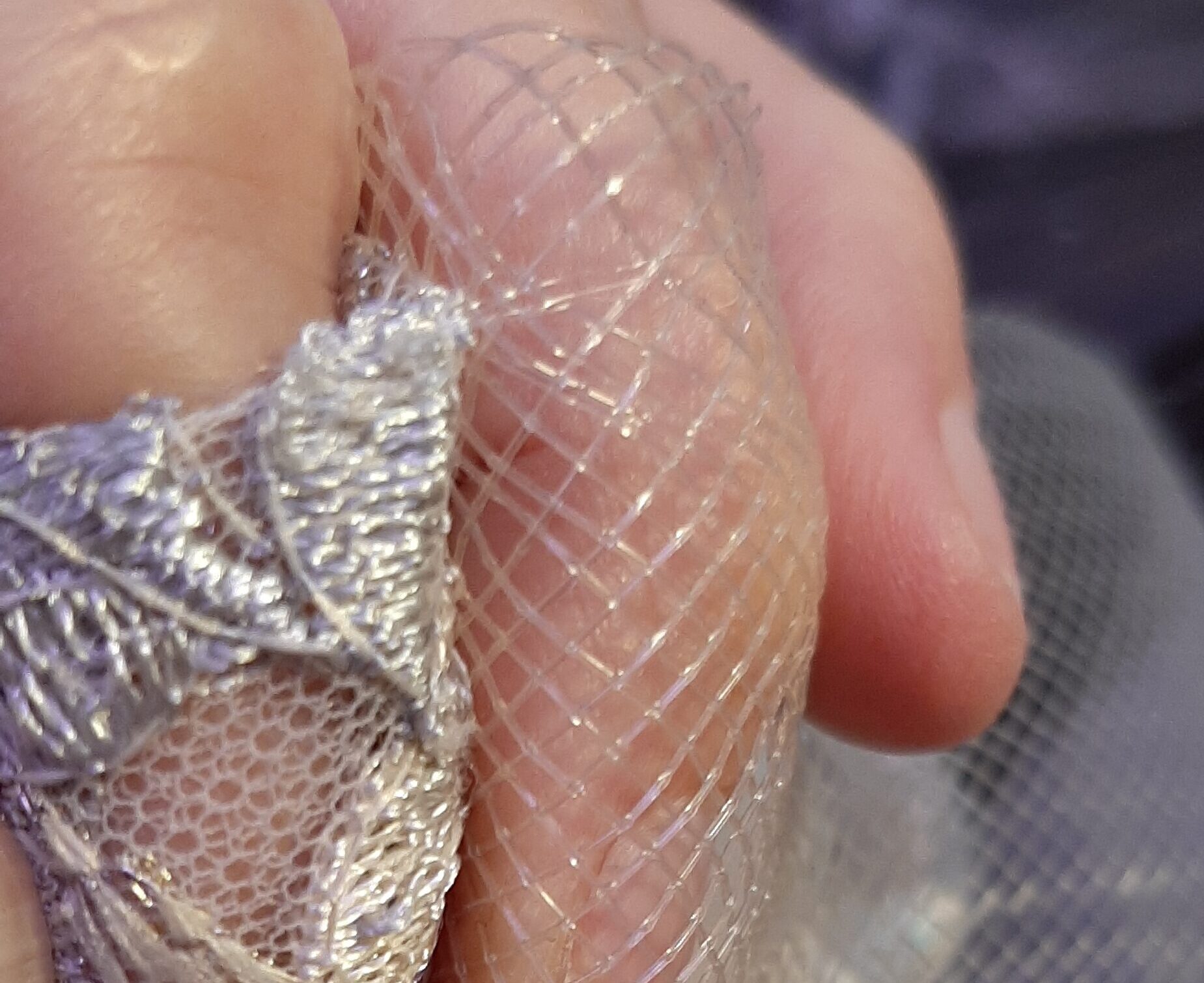
Hand-sewing lace with invisible thread raises the art form into an exercise in extreme patience, precision, and an obsessive attention to detail. One has to work even more diligently, devoted to the work, watching for the reflection of light as it bounces off what is no less than a delicate fishing line. You sit in surrendered patience taking tiny stitches that follow the natural pattern of the lace so closely that the thread disappears into it.
The invisible thread is fine, slippery, and sometimes surprisingly resistant to the needle. It makes it easy to lose track of where the thread is against the intricate texture of the lace. I find it nothing less than a fine fishing line with its own argumentative personality determined to follow its own inquisitive direction. As a seamstress, one must keep just the right amount of tension—too loose, and the stitch may show or leave the lace uneven; too tight, and the delicate fabric can pucker or distort.
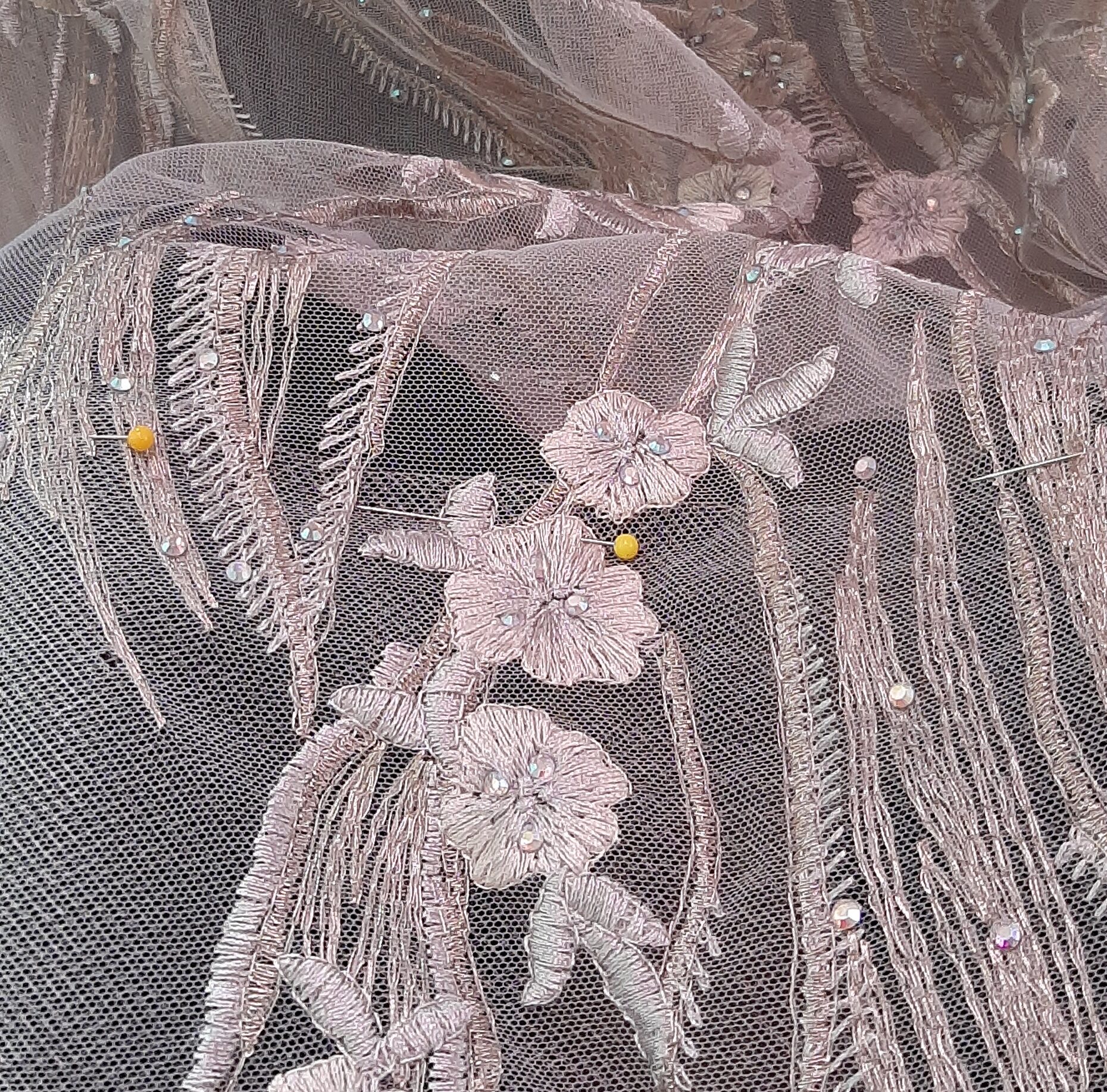
Because the goal is for the stitches to become virtually indistinguishable from the lace, each stitch is carefully placed among the flowers, vines, or other motifs. Rather than simply sewing a straight line, one studies the lace’s pattern and uses its texture to conceal the work. You may catch only a few threads of the lace at a time, lifting and turning the fabric as she works.
It can be a very tactile process. Fingers constantly feel for the structure of the lace while eyes grow weary searching for the safest, least noticeable place to bring the needle through. Under good light, you curl your body over the work, checking from different angles to make sure there are no glints of thread or visible punctures.
The result is meant to look effortless—as though the pieces of lace were naturally joined together. But that seamless appearance comes from dozens or hundreds of tiny, deliberate stitches, each one placed with care. The beauty of the finished work is partly in the fact that the seamstress has made her long, tedious work nearly invisible.